
You’re in.
Turn the page for Chapter Two.
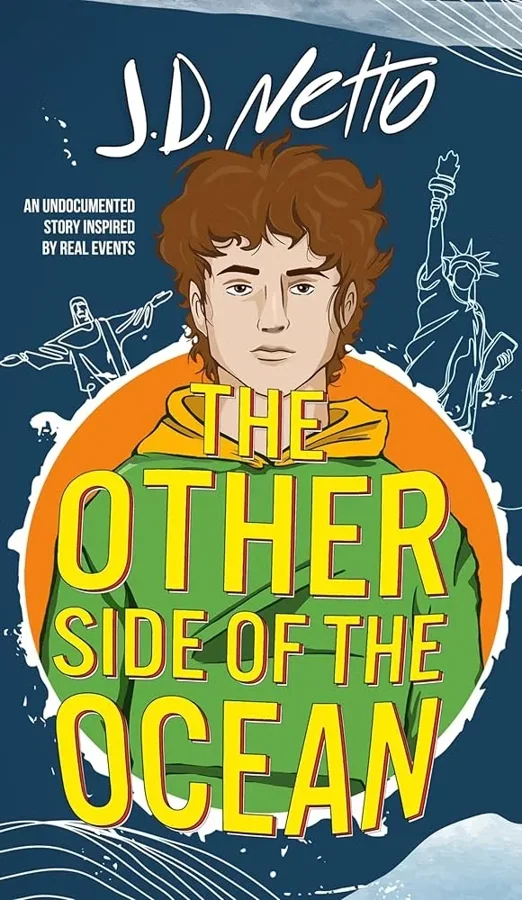
Free sample · Three chapters
“So many people risk their lives for a chance at the so-called American Dream.”From Chapter One
Read here in your browser, or download for Kindle, Kobo, Apple Books or PDF. . You’ll join J.D.’s readers’ list; unsubscribe anytime.
Praise for The Other Side of the Ocean
“Heartfelt and authentically grounded; a must-read.”

“Drawing from events in his own life, Netto infuses the narrative with heartbreaking realness.”

Chapter One
September 2011
I was in the living room when Mom answered her phone and sat on the porch. She stayed there after she hung up, alone with the sunset. I didn’t bother interrupting. She eventually came inside and spilled it. Her friend’s husband had been detained by ICE. There had been no word on him since. No phone call. Nothing.
I tried imagining what that felt like. One moment you’re working, the next you have cuffs around your wrists and ICE is dragging you to prison until your fate is decided. Sure, overstaying your visa and-or crossing the border was against the law. Some people did it to commit crimes. Others to dream. Deportation stories were like legends in my house. You’d hear about them from parents who had heard it from their friends, but they were these tales that happened to people other people knew. It had never happened so close to us.
No matter how much I wanted to pretend—how much I wanted to dream—the most fucked-up part was that my family and my best friends weren’t exempt from meeting the same fate. When it came to my friends, we lived an illegal life because other people had made choices for us when we were young. And now we had to make the best with what we got—which wasn’t so bad, aside from the whole no-paper thing.
Sometimes I felt bad about complaining that I lived in America. So many people risk their lives for a chance at the so-called American Dream. But mine was neither a dream nor a nightmare. It was limbo.
I stared at the white ceiling of my bedroom, hoping it’d turn into a canvas displaying a way out of my undocumented reality. I thought about it often. How I couldn’t have roots in the place I had spent the last ten years; how my dreams were limited to a piece of paper; how there was no light at the end of the tunnel from the place I stood. And now, I was doomed to think about this secret identity more often.
My family’s undocumented truth wasn’t something I went around advertising. A lot of people didn’t really understand what that adventure meant. Blame the movies or the media. Every illegal person had a different story, but a whole lot of people assumed we had all swum across a river, crossed a desert, and ended up here to become criminals. Little did they know that, to some, that was the price to pay to have a shot at a life beyond oppression.
I was six when the family and I left Brazil and flew over the Atlantic, tourist visas in hand. My parents sold whatever we had after we lost our store. I somewhat understood what staying here meant at the time. I hoped things would work themselves out eventually. Well, I was still hoping.
I ignored my undocumented thoughts whenever they knocked. I’d lose my shit if I let them hang out for too long. Which I did sometimes. I’d then spiral. My let-me-Google-any-immigration-loopholes obsession followed. The last time I fell down the rabbit hole, I came across all these articles talking about immigration reform for kids like me. The famous DREAM Act. Its fate had been a roller coaster ride as wild as my own. From being introduced over a decade ago to being brought to the US Senate last year and obviously failing because apparently kids like me—Dreamers, as the press liked to call us for dramatic purposes—were political pawns for whichever party. I mean, how many times can you ride the same roller coaster in a row before you puke everywhere?
My own roller coaster had a few loops and drops that led me to my big internal debate: to stay undocumented or to go back to the place that served as the setting for what I called “The Great Franco Family Debacle.”
I finally got out of bed, showered, and got dressed in the first thing I could find in my closet: jeans, boots, an Abercrombie t-shirt, and a jacket. If my mom were home, she’d tell me not to go to school with my hair wet. Fall was here and the cold could give me pneumonia—or so she’d say. Mom was awesome. I actually enjoyed our talks and the effort she made to be a part of my life regardless of how much she had to work.
I always questioned her whenever she casually mentioned the dangers of living in the cold weather. Why Framingham, Massachusetts, then? Why not Miami or LA? Her argument was that the cold would give us thicker skin. To me, she just wanted to escape anything mirroring our lives back in Fogo Dourado—even the everlasting tropical weather. Even though I was young kid at the time, I still had vivid memories of Dad rolling down the steel doors of the store for the last time; Mom crying on the sidewalk; all the gossip and criticism.
When I was a kid, I’d watch American movies where the family gathered for a lavish breakfast before the kids jetted off to school. When my parents told us we were moving to America, I thought that we’d live like that. My life couldn’t be more different. A bowl of Fruit Loops was breakfast for my sister and me most days; Pop Tarts were also accepted. No fancy pancakes or bacon on weekdays. Parents started working before the sun was out and sometimes were home early enough for dinner.
My sister was already in the kitchen, eyes glued to her phone as she whirled the cereal in her bowl with a spoon.
“We should skip,” she said, her backpack on the chair beside her.
“Laila, I actually enjoy shop week.” I grabbed a bowl from the cabinet. “That was the whole reason why I decided to go to a technical high school. It’s already Thursday, anyway. And today I get to draw shit, eat junk, and listen to music. It really isn’t so bad.”
“Mom already told you not to say ‘shit’ in front of me.” Her phone screen was still more interesting than my face.
“Like you don’t hear worse at school.” I poured the cereal and the store-branded milk into my bowl and reclined on the edge of the table. Laila was thirteen but looked much older. Her face had gone from being round and plump to chiseled and long in a matter of months. No more styling her brown hair in pigtails. Now her shoulder-length locks draped in front of her face or in a bun.
“We could tell them we got deported,” she suggested with a smirk, finally looking at me. “She got so emotional over what happened to the Moreiras yesterday.”
“What a nice thing to say before seven a.m.,” I said.
“I can’t wait until it’s my turn to go to a tech school next year.” She disregarded my comment.
“If we’re here by then.” I munched on some cereal. “I hate this whole ping-pong game they play with us. They decide to stay, to leave, to hang for a little longer. A decade later and we’re still going through this shit.”
“Ah!” She raised a finger. “There it is again.”
“Well, this situation deserves the word. It’s shit. Shitty.”
“Seriously.” She dropped the spoon on the edge of the bowl. “Like, hello, can I plan on going to high school next year or should I just, I don’t know, curl into a ball, and stay in my room listening to sad music? My Portuguese is practically nonexistent. Should I take Portuguese classes online? You, at least, speak it a little bit.”
“Um pouco,” I said. “Mas não o suficiente. Anyway, on the bright side, I did read this thing online about Obama and what they were planning for immigration—”
“Matt,” she interrupted, holding her hands in the air like a traffic cop. “Just stop. You always do this. You want to see the good in this whole thing. I get it. That’s how you cope. I cope with sarcasm. And it’s okay. But stop doing this to yourself. Let’s just enjoy today, okay?” Her brown eyes returned to the phone as she crushed her cereal with her spoon. “At least if we go back, Dad won’t be on your case about going to school for art anymore.”
“Right,” I mumbled. “Such a plus. He’ll want me to take over the business he plans on reopening after it destroyed the family. Because that’s what I’ve always wanted to do with my life. Que merda.”
“Saying ‘shit’ in Portuguese doesn’t exempt you from Mom’s request,” Laila said snidely.
The hissing of the bus pulling up in front of our house was her invitation to leave before I could contest her snarky comment.
“See you later.” She grabbed her backpack.
“Still can’t believe they pick you up in front of our house!”
“I’m one of the lucky ones,” she said as soon as she closed the door behind her.
I dumped the rest of the cereal down the drain, put on my headphones, and left the house only after pressing play on Linkin Park and Jay-Z’s “Numb/Encore.”
Things weren’t so bad once I stepped out of the house and tucked my undocumented thoughts into my secret imaginary drawer of unwanted things. I loved my friends. I loved where I lived. I loved art and Halloween and every cheesy holiday celebration there was.
A couple of my neighbors had already decorated for spooky season. Pumpkins, ghosts, and skeletons crowded the front yard of a few homes. One of the neighbors had even built a cemetery. Some would say that September was too early to decorate. I neither confirmed nor denied that fact, because if it were up to me, I’d decorate for Christmas on the first day of fall.
The bus arrived. I dozed off and woke up when we stopped in front of the concrete façade displaying the silver letters spelling out “Joseph Ferguson High School.” Our mascot was proudly displayed next to the words, a unicorn inside a triangle.
I grabbed my phone to check my messages and accidentally opened my front camera. My brown eyes gave me too much credit; people would think I was high before 7 a.m. I rustled the front of my brown curls over my eyebrows. I'm not that cool—just tired.
Three messages. Fa—or Lesbian One—had sent a quote in the chat: “Focus on the positive and your day will be brighter. See the negative and your day will be fucked.” She sent these occasionally. Ignore the ones she considered good and there’d be hell to pay.
Diana—Lesbian Two—had replied with a heart emoji.
Pedro, aka Manga Boy, simply said, “The positive today is the bell ringing at three. Bro, I already want my bed again. To com sono.”
Our chat was called the Forbidden Fortress, named after our own friend group, established back when we met at Woodrow Wilson Elementary. I was never a fan of group chats, so back when we started ours, I requested that we each have epic names. Manga Boy was a tribute to Pedro’s undying love for all things anime, manga, and hentai; Fa and Diana called themselves “Lesbians One and Two” on the daily already. They said it was a modern-day tribute to Dr. Seuss’s characters. I was Elder Wizard because Fa insisted my soul was old and my mind too complicated. She actually gave me one of those cheap wizard costumes you buy at party stores for my birthday. I had expected a second gift, but no. She claimed I needed to embrace who I truly was, and the costume was a start. I never wore it.
I was the first to arrive at our exclusive table in the cafeteria. Exclusive because, since freshman year, no one else had joined us. It was far enough from all the others but not too far from the vending machines and the food aisle. It also faced the floor-to-ceiling window that provided a view of the football field. The table had been named after our group chat.
After grabbing a bagel with cream cheese and a boxed chocolate milk, I paid the vending machine a visit, bought an apple pie, and returned to the table just in time for the rest of the members of the Forbidden Fortress to arrive.
Fa had picked a pretty modest sweatshirt today. All it said was “Magic Is Around You.” Her curly hair was up in a messy ponytail and her black jeans had holes on both her knees. She was a brown curvy girl and wanted the world to know how proud she was of her figure. “The original babe from Rio,” she’d call herself sometimes.
Diana had her hair in a single braid falling over her right shoulder. She wore classic Diana color tones. She was like a coffee mug on a foggy fall morning, always wearing browns and oranges, even in the dead of summer. Even her braces were orange. She had insisted on getting them last year to fix her front gap. I always thought the gap was her thing, like, her signature. But she wanted to get rid of it.
Pedro had his usual band t-shirt. Red Hot Chili Peppers was his choice for the day. His once-white Converses were now a mixture of mud and doodles. He’d had a shaved cut since last year. According to him, the five minutes he used to spend on his hair in the morning were now five extra minutes of sleep.
“Somebody didn’t wait for his friends.” Fa hugged me. “Sacanagem, Matt.”
“I was hungry,” I said after she let me go, my arms now around Diana. “Please tell her it’s too early for lectures.”
“She already came for Diana and me on the bus.” Pedro fist-bumped me. “She said something about…” He rolled a finger in the air, showing Fa that he needed assistance remembering.
“How you all need to be more in tune with your spiritual selves,” Fa added, rolling her eyes. “Listen, people. You all need to listen, okay? You really do.”
“Thank God I have you to realign my chakras.” Diana pecked Fa on the cheek. “Without you, my spiritual self is like a caffeine addict minus the coffee.”
“You’re lucky I’m patient, babe,” Fa added with a smile. “I’ll make the goddess of the sea an offering for all of you on New Year’s. I promise.”
“You’re too kind.” I dropped my mouth open. “Can she also bring us green cards?”
“Good one,” Pedro said with a laugh.
“I’ll ask her.” Fa clicked her tongue and winked.
They all marched their way to the food aisle. I didn’t miss Fa and Diana lacing their fingers. I wish I had enough guts to take the blow like they did last year, to own up to what I thought would be an inconvenience to people around me.
Many from my parents’ generation in Brazil still held on to their anti-queer religious beliefs like anchors. Blame religion. Blame homophobia. Blame whatever. Not that we didn’t have a lot of the same in many places in America. Fa and Diana coming out to their Brazilian conservative families who lived here was a big deal. They were sort of forced to do it after everything that happened to them.
When they posted a picture with the rainbow flag last year, Dad began bragging to some of his friends about his son hanging out with lesbians. You’d think he was doing it because of how progressive he was. That wasn’t the case. He actually asked me if I had ever considered hooking up with both of them. I’d always ignore his comments. But it was harder to ignore his questions about the girls I was seeing. No, Dad. No girls. Tons of gay porn, though.
I hoped people thought I was just picky when it came to dating. The truth, however, was entirely different. I was eleven when I downloaded an illegal copy of Brokeback Mountain on the internet after watching the trailer. Heath Ledger and Jake Gyllenhaal as sexy cowboys made me feel all sorts of things, including fear. I related to Ennis insisting they keep their love a secret. Not because I was ashamed of it. I just didn’t want to add that hard truth to the pile of another one. Who knew what could happen after I stepped out of my safe gay closet?
My family wasn’t really religious. We were Catholics, but we stopped going to mass after moving here. Some people who attended church were somewhat okay with the gays. I knew where Dad stood on that spectrum. No son of his would ever be a “viado.” He made that very clear when one my cousins in Brazil came out last year.
When he told Mom, she nodded and made no comment. She never talked about it. Not with him. Not with me. I assumed she also saw gayness as a sin. Whenever we were out and we saw a gay couple, she’d go quiet or get serious fast.
I knew who I was. I had always known, but the not knowing how people would handle my truth kept me from living it. But I was getting tired of hiding so much of myself. Whenever I saw Fa and Diana flaunting their love for the world to see, I wondered if I’d ever have anything similar. Would I ever be as brave?
“You heard what happened yesterday at that fabric store downtown?” I asked when they returned to the table.
“The ICE raid?” Pedro asked, pounding the bottom of his wrapped straw on the table until the plastic burst. “Yeah, Dad told me. It’s on the Brazilian newspaper today. They were fast about printing that story.”
“Foda,” Fa said, slicing her bagel with a plastic knife. “I got so scared for my mom and aunt. Even scarier to think we’ll join the undocumented club soon. I think I need a sweater that says, ‘Undocumented and Proud.’”
“Great idea, Fa.” Pedro shook his head. “Wear that after you’re eighteen while driving somewhere and you’ll be out of here in no time.”
“Funny to hear everyone talking about driver’s ed and college.” Diana sipped from her orange juice. “The other day, these girls in Algebra were talking about the Art Academy in Boston and how they have this amazing graphic design program. I just listened. What was I going to say? ‘Hey, this girl born in São Paulo but raised here can’t go to college because, well, tuition for illegal people costs a fortune?’ It sucks to have grown up here, know nothing but this life, and yet also know it’ll soon be taken from us. I was two when they brought me over. Two.”
“One of the people arrested is friends with my parents,” I revealed. “His wife called yesterday. I didn’t ask a lot of questions.”
The air around the table grew heavy, like we had all walked into a dark forest or got locked in some dark tower while waiting for the arrival of an imminent monster.
“This is too heavy to start our day with.” Fa clapped. “Did. We. Not. Read. What. I. Sent. This. Morning? Can we focus on the fact that today we’re doing conté drawings in class?”
“My fucking favorite,” I said. “I love when I say ‘conté’ to people and they have no clue what I mean. Then I say ‘charcoal’ as if they should’ve known what that word meant all along. It makes me look smart and trilingual.”
“I’m so glad we finished that corny assignment,” Diana said. “Coming up with our own cereal boxes? Not interested.”
“Your character did look like a stripper on a spaceship,” Pedro said. “I actually read this hentai about a dragon and a fairy getting it on and—”
“Don’t listen to him, babe,” Fa said.
“Hey, I liked the story,” Pedro confessed. “I wanted my cereal character to look like Sailor Moon holding a peni—”
“I beg you to never finish that sentence,” Diana said. “My ears are too precious.”
I never took my time with these three for granted. My childhood years in Fogo Dourado were lonely as fuck. Once I started second grade, my artistic abilities were associated with being a fag or a sissy—and no one wanted to be around one of those.
The Forbidden Fortress had been the only true friends in my life. We started talking after we realized we were all Brazilian kids being raised here. We shared the common trait of a very rusty Portuguese. Our undocumented truth brought us closer. Pedro’s thing was drawing his own mangas. Fa loved calligraphy and anything related to the zodiac and witches. Diana loved landscapes. She created these colorful pieces with colored pencils.
A lot of things brought us together. But I carried an extra weight— something unrelated to papers or immigration status. So much of who I was had to be hidden. I wondered how it would feel to let that part of me be on full display. Maybe I’d be given the chance to feel. To forget. Or even to breathe.
Join J.D.’s readers’ list and keep reading right here. We’ll email the chapters too, so you never lose your place.
No spam. Unsubscribe anytime.
Turn the page for Chapter Two.
Chapter Two
September 2011
The visual arts shop was a vast space. Its walls were covered in art and the drafting tables were splattered with different paint colors. From watercolors to conté pieces, it was like walking inside an art gallery. And I loved every minute of it.
Mr. H claimed having different art styles on display inspired the subconscious mind. The smell of coffee was always there to greet us, drifting from the computer lab where we’d eventually migrate as juniors next year to learn graphic design.
“Morning to the four amigos,” Mr. H said, reclining on the edge of his desk. The man was brave in his outfit choice of the day: denim overalls covered in paint blotches and a blue beret.
The drafting tables had been arranged in a circle, and right in the middle was a table with a bowl overflowing with what I assumed was some bizarre abstract art: plastic fruits, a matchbox, a candlestick, old books, a comb, and yarn strings.
“Can we ever get a live model for one of our projects, Mr. H?” Pedro blurted out when he spotted the bowl. “Maybe, I don’t know, some really hot people. Not a bad idea, right?”
“Are you going to pay these really hot people?” Mr. H eyed the clock on the wall.
“This doesn’t inspire me at all.” Pedro sneered at the objects as if gazing at a monster.
Even though the desks had been rearranged, we could still identify which ones were ours. The surfaces of the desks displayed years of accumulated ink and scribbles. We had each added our own flair to the overpopulated canvases. Those had become our identifiers.
I sat at my desk first, facing the bowl dead on. The rest of the Forbidden Fortress’s desks had been scattered throughout the circle. Pedro was the first to drag out the desk beside me so there’d be space for his. Fa and Diana did the same, sitting to his right. Mr. H watched the scene without a peep. His face spoke volumes, though: it’s too early for this shit.
The door opened. Neb, the religious kid whose every breath and step was about his congregation. His red hair was combed back, looking even more vibrant against the green tones of his plaid button-down. He wore his usual black Converses, which he had converted into a canvas for white crosses and Bible verses.
He didn’t greet anyone as he headed to his desk, which happened to be in front of me, luckily to my left so we wouldn’t have to stare at each other dead in the face.
He always sat properly, like he was attending a very fancy tea party or something. His parents had named him after King Nebuchadnezzar. I Googled that king once and it always made me curious as to why they had named him after someone so cruel.
He was all right when he wasn’t trying to convince the entire world that the Bible was one hundred percent factual. One time he told me listening to non-Christian music was the cheapest way for me to buy a one-way ticket to Hell. Ha—I actually struggled to hold a snigger that day. He had these big eyes, like two round fishbowls, and whenever we talked, they widened even more. We chatted here and there while at school, but I always had this feeling he judged everyone who wasn’t a part of his coven.
I wondered if he also judged the other students and how most of them lacked any real interest for the arts. Eighty percent of the kids in this shop weren’t here because they knew what they wanted from life. On the contrary. They picked art as an excuse to delay their decision. Their lack of interest and commitment was like a billboard plastered on a highway. The display: we’re fucking scared to decide what we want to do with our lives.
The other students who were hanging out in the hall darted inside when the bell rang. Mr. H walked to the middle of the circle as they took their seats, leaving an empty desk beside Neb.
“Are we expecting anyone else?” Fa said.
“Curious much, Ms. Andrade?” Mr. H smirked.
“Always,” she replied proudly.
Pedro nudged her with an elbow and said, “It’s a seat for your ghost buddy. Can’t you feel his presence?”
“I do hope a ghost haunts your ass soon,” she whispered.
“Language,” Mr. H said.
“No, seriously.” Pedro pointed at the empty desk. “What’s up with the extra desk?”
“We have a new student joining us,” Mr. H tucked his hands in his pockets. “Guess he’s running late.”
“We have a new student joining us on a Thursday?” Pedro asked. “They do realize they could’ve stayed home and enjoyed a long weekend, right?”
“Amazing advice, Mr. Santana,” Mr. H said. “It truly shows how dedicated you are to this class.” He clapped. “All right, let’s start the day, everybody. Your subject is on the table in front of you.” He grabbed one of the apples and tossed it up in the air. “Your piece should have as much detail as possible. I want shadows and depth and everything else you can give me. But that’s not all!”
An expectant silence lingered. Mr. H loved his dramatic moments.
“The most interesting drawing will be awarded a donut box from Dunkin’ Donuts tomorrow,” he revealed.
Ooohs and ahhhs echoed like a choir. Mr. H put the apple back and continued, “But don’t give me stick figures, all right? You have until the end of the day tomorrow to finish it.”
My phone buzzed in my pocket.
Manga Boy: Win this one for all of us! I require four Boston cremes.
“We will put our phones away, right, Mateus Franco?” Mr. H was across the room at this point, holding his iPod and staring like I was a criminal who had just broken out of jail. He slid his glasses to the tip of his nose and squinted his eyes before pressing play. Nelly’s “Just a Dream” came on.
The sound of the door opening called my attention as I pulled my art box out of my backpack.
He walked—no, strutted—like the world was his. One of the straps of his backpack was around his shoulder, the other hanging loose like a swaying keychain. His messy hair was like a tangled dark yarn, and he had this dimple on his chin—a sudden target for my eyes. My heart pounded faster when we looked at each other for a few seconds, the hint of a smirk popping on his face.
He turned left and walked to Mr. H’s desk, handing him a note. Mr. H glanced at the yellow paper and lowered the volume of the music before it reached the chorus.
Everyone stared at dimple boy.
“Everybody, I’d like you to meet James Alberte, a Framingham High transfer.”
“It was about time you joined the good side,” Neb said, eyeing him like he was the next victim of his let-me-preach-to-you-for-hours routine. “Those people have nothing on us.”
“Joseph pride!” I blurted out with a fist in the air. Why the fuck did I do that? Everyone’s stare hurt more than barbed wire. How did I know? When I was a kid, I crawled under one while running away from a stray German shepherd and in return got a gash on my calf. The physical pain of that memory was no match for my current embarrassment. The other three members of the Forbidden Fortress were in disbelief at my action.
“Mr. Alberte, you may sit next to Mr. Hamwinter there.” Mr. H pointed at the empty desk next to Neb, clearly suppressing a laugh at my comment. It was only when he walked toward the chair that I noticed that James and I would be facing each other.
He strolled to his seat. I had been so taken by the guy that it took me a while to realize that he’d have to sit in front of me—like, right in front of me. It would be really tough not to stare. What would people say? I mean, the bowl was also in front of me. It could be used as an excuse in case anyone asked.
“Hey, neighbor,” Neb said.
“Hey.” James got his art box from his backpack as the music resumed. “Is this the usual class setup?”
“Just for still-life days,” Neb replied. “Hope you enjoy visual arts.”
Mr. H explained to the new kid the assignment and the prize.
The bowl and the new kid competed for my gaze—the new kid winning by a mile. I tried to keep my eyes on the bowl as much as possible, but the dimpled chin called me like a cursed mermaid in the ocean. Kill me now and don’t bring me back from the dead.
I was no virgin, but suddenly I sure as hell wished I was. My first experience had been shit. Sixth grade. I went over to his place. We were both in the closet. The kisses were awkward, and the sex was even more strange. I knew where to put it, but I don’t think he got as ready as he thought he was. I didn’t care, but things went south from there.
James struck me as a guy who would know. Maybe it was just fantasy. Fuck. I had undressed him, and he had only just arrived. I knew one thing. He was pretty good at his craft. He had an outline of the jumbled still life in less than an hour. At one point, I thought he had noticed the staring. He smirked as soon as I caught sight of him. I could’ve sworn he had waved at one point. Maybe he was wiping eraser dust off his table. Who the fuck knew? All I knew was that if I kept going at this pace, the donut box would remain a desired prize.
Outlining my drawing was normally a fast process, but today it was like pulling thorns from an ass that had crushed a cactus. Ass. Because of the dimple. The dimpled chin made me think of one. I wanted to draw the dimple. Then I thought about his ass.
Fa had already started shading her drawing by the time the lunch bell rang. Diana had decided to add pops of red on hers. Pedro wasn’t as far ahead, but he was definitely being more productive than I was. His style had the same clean lines mangas did. At one point, the Forbidden Fortress was worried about me being so behind. Little did they know I had made my own personal progress: imagining James’s ass for the last three hours.
We didn’t rush to the cafeteria when the lunch bell rang. We knew our table would be there. That’s how things were done here. You picked a table in the beginning of the school year and it was yours until the end.
The four of us grabbed our food and headed to the Forbidden Fortress. James sat at the table across from ours with Neb and a few other kids I called Neb’s Minions. Thankfully those people were in Neb’s academic classes and not in our shop. I wouldn’t be able to stand a class with a dozen people like him. They were all in different grades but went to the same church.
Pedro talked about something. I pretended to listen. I nodded and agreed while practicing a thousand ways to stare at James in the most unnoticeable way possible. A punch on my shoulder destroyed my plan.
“What the fuck, Pedro?” I almost crushed the boxed chocolate milk in my hand.
“Tá aqui?” Pedro’s jaw hung like a swing.
“Obviously. You see me, right? Fuck, dude. That hurt.”
“You hear about this new zombie show?” he said. “Everyone’s talking about it. It was inspired by this anime from the eighties.”
“No, I haven’t,” I said. “But I will turn you into a zombie if you do that one more time.”
“What are you looking at?” Fa turned around and nodded. A grin appeared on her face when she saw James.
“I feel sorry for him,” Diana said with puckered lips. “Corralled into Neb’s group on his first day. What a sad choice. He’ll have earned a degree on theology by the end of the day.”
“Corralled…” Pedro mumbled. “Fancy word.”
“I actually read the books on our summer list…”
Diana’s words were mumbles. James locked eyes with me. Shit. Did I have food hanging from the corner of my mouth? Had he noticed the staring? Maybe he heard Diana’s comment? No, that couldn’t have been it. Diana was the most soft-spoken out of the four of us.
Despite my insane thoughts, my eyes remained on his. There was a part of me that wanted to turn away as fast as I could, but I couldn’t ignore the other that was curious about dimple boy. I wanted to see who was going to be the first one to break contact, but none of us did after a few seconds. I smirked. So did he. My cheeks burned. I held my ground. He scratched the corner of his lips and was about to say something when Neb bumped him with an elbow and managed to steal his attention again.
James was doomed to be at Neb’s Corner for the remainder of the year if he didn’t act fast or if somebody didn’t rescue him. I debated on whether to go there and invite him to our table. But no one had ever joined the Forbidden Fortress since freshman year. And no one invited you to a different table like that. That’s not how it worked.
The bell finally rang and we all flocked back to class. The rest of my school day was a fuck-fest. I couldn’t concentrate on the bowl. Even the confused students seemed to be ahead of me.
James’ frown, the way he stared at his paper, and the way he pressed his lips while drawing were more interesting than the assignment.
The final bell rang. A fucking relief. Fa, Diana, and Pedro left through the back door, since they were all hitching a ride with Fa’s mom. The three of them lived on the other side of town.
James followed me as I walked down the hall by myself. No big deal. I turned toward the stairway leading up to the entrance. He was still behind me. I slowed down my pace as we neared the exit. We walked side by side at this point.
“Running from something?” he asked.
“Time,” I mumbled. “I mean, you know, time is limited.”
“Okay…” He frowned. “Scared you’ll miss the bus home?”
“Yeah, that was definitely it.”
“Which bus are you taking?” He opened the door and stood ahead of me so I could walk by him.
“Forty-nine. You?”
“Same!” he said. “Good to know one person on the ride home. My parents insisted on dropping me off before they left town this morning.”
“Don’t get too excited,” I said. “Not a lot happens on forty-nine.”
“Well, you’re on forty-nine.” He shrugged. “It can’t be that boring.”
I felt a laugh coming on, but I snorted instead. “My name is James,” I blurted out, my cheeks burning like a toaster. “I mean—Mateus. Jesus.”
“So, James, Mateus, or Jesus?” He fixed the straps of his backpack over his shoulder. “Or all three?”
“Mateus,” I said as he followed me into the bus. “Mateus Franco. People call me Matt. Easier to remember.”
Those sitting down had their headphones over their ears and their eyes on their phones. James followed me until I stumbled upon my usual seat. It was six rows away from the very last seat. He sat beside me as if there was no vacancy around us.
“I thought you were going to save me during lunch.” He dropped his backpack between his legs. “Can’t believe you left me to the vultures like that.”
“You needed saving?” I scratched my head.
He scoffed and continued, “Neb’s stories about his church trip to LA last summer are not that interesting. And I love how these kids go on very expensive mission trips. And you knew I needed saving. Come on. You saw me.”
“I did.” I smiled. “He told you about the Tyler—”
“—Perry encounter,” we both finished the sentence together.
“Twice.” James held two fingers in the air. “Which, as controversial as this will sound, I think was a lie. No pictures because he left his camera? Why even mention them?”
“Next time you need to be rescued, hold up two fingers like that as a sign and I’ll swoop right in.”
“Will do.” He grabbed his earphones from his backpack.
“You’re pretty talented,” I mentioned. “Saw your drawing from my desk.”
“You, too,” he said. “So, are you doing it for the donut box, or do you actually see a future in art?”
“Doing it for the food now,” I said. “And plan on doing it to put food on my table as well.”
He smiled, arming his ears.
“What’re you listening to?” I asked, hoping the conversation would continue. I wasn’t ready to let him escape into whatever musical universe he was heading to.
“Hans Zimmer…” The way he said my favorite composer’s name as if I wouldn’t know him crushed my heart for a second. “Know him?”
“Know him? He’s only the king of movie scores. I listen to his stuff when I’m drawing. He’s composed the most iconic themes.”
“I know! I feel the same way about him. So what’s your favorite art style to draw?”
“Conté, but not what we’re drawing now. Not a big fan of random objects tossed inside a bowl. I like faces—especially eyes. The way the light hits them, the secrets behind them…”
“Why?”
“A face can tell an entire story in a matter of seconds. And eyes are great at telling secrets.”
“What do mine tell you?” he grinned.
My legs had been chopped off. I knew that for a fact. I couldn’t feel them. He must have known, since he chuckled.
“Want to listen with me?” He held up one of his earphones, the question an obvious way to fill the awkward silence. “It’s a playlist I put together the other day. I call it ‘My Escape.’”
I gave in to his request, recognizing the song immediately.
“The theme to Inception,” I said.
“Enjoy.” He closed his eyes and rested the back of his head on the cushioned seat.
I was enjoying this moment. Not because of the music, but because of him.
He didn’t make a single effort to let me walk out in one piece when the bus stopped. He kept his legs in the same position, keeping the space tight between his knees and the seat in front of us. My calves brushed his knees as I walked out. Thank God my jacket hung below my waist, otherwise the rising mountain south of me would’ve been the hero to have saved forty-nine from its boredom curse.
Chapter Three
September 2011
The tip of the sketch pencil grazed the paper as I listened to Hans Zimmer’s Inception soundtrack. I had been sitting on my bed with my back against the wall and my headphones over my ears since I got home from school. I had one of my books on drawing anatomical poses in front of me. My plan was to practice those poses, but the dimpled chin and the messy hair forced me to draw his face from memory. My cheeks actually burned when the lines and strokes finally resembled him.
I grabbed my phone and looked for him on Facebook. There were a handful of accounts under his name, but he wasn’t anywhere to be seen. I probably scrolled for a good minute before I heard the footsteps creaking up the stairs. I would recognize them anywhere. Mom was home. My room was always a mandatory stop before she went into hers. Thank God she always knocked. Barging inside a sixteen-year-old’s bedroom without a knock could result in seeing things no mom should ever see.
“Come in!” I shouted, sliding my headphones to my neck.
“Oi, filho,” she said. “Just saying a quick hello.”
“And I say hello back,” I said with a pencil in my mouth.
“Good day?” She realized she still had her name tag pinned to her white button-down. “Oh, that’s why I kept feeling a little prickle driving home.” She snapped it out.
I bit down on the pencil. It had been the most memorable yet confusing day of the school year so far. But voicing my thoughts now would trigger a conversation I didn’t want to have.
“Pretty ordinary.” I chose safety over danger. “Yours?”
“Tranquilo. I’m going to get dinner ready. Your dad left the room since he got home?”
“Don’t know.” I held up my sketchbook and waved it at her. “Been busy. He’s probably been asleep since he got home from work.”
“You better wash those smudgy hands really well, Mateus.” She stabbed a finger my way. “You’re chopping the salad tonight.”
“Mom, Laila can do that today,” I protested. “Come on. I really want to—”
“Anyone can do it.” She widened her eyes. “But you’re doing it tonight.”
Mom worked long hours, but she was always ready to cook the family dinner when she got home. She never complained about her job, no matter how exhausting her day had been. She had been a housekeeper when we first moved here. At the time, even though her shift started at seven a.m., she got dropped off at her first house at around four-thirty because we only had one car and Dad had to start his shift at Nogueira’s Marble and Granite around five. To pass the time, she bought an English course from a store downtown. She used to listen to the CDs while waiting for her shift to begin. That’s how Mom learned English. She got a job at Mass Scientific as a catering manager two years ago. Dad bought himself a copy and listened to the CDs in his car when he drove to work. He struggled with learning the language more than Mom.
My sister and I picked up the language a lot faster. I was fluent in less than a year. Obviously, I had to be the one to speak on the phone whenever they needed something back then, since Laila was too young. “Mateus, I need to talk to the cable company.” “Mateus, I need to speak to the phone people. The bill is wrong.” “Mateus, Mateus, Mateus, Mateus.”
I slid my headphones back on and decided to take advantage of the few minutes I had before I had to join Mom in the kitchen. I worked on his eyes, trying to catch the light as they stared. Then the eyebrows, but getting them to resemble their actual shape was a doozy. With the pencil back in my mouth, I gazed at the face of the stranger that had inspired me today, wishing the pencil was a little fleshy southern part of his.
The smell of cooked rice and garlic made me realize that a few minutes had turned to almost an hour. I closed my sketchbook and darted downstairs. Laila was in the kitchen, squeezing a few oranges into a pitcher while Mom stirred the beans.
“Look who decided to leave his cave,” Laila said. “Hello, caveman.”
“Ha-ha. Mom, did you knock?” I asked.
“You were so focused in your drawing,” she said. “I decided to leave you be and make the salad myself.”
“Done drawing. I can make it.”
“Perfeito,” Mom said.
“We need music, though.” I approached the iPod dock in the corner. “The silence in this room is killing me.”
“Don’t play those depressing songs you like,” Laila said. “Anything but those, okay?”
“My music isn’t depressing,” I said. “It’s not my fault all you want are beats and synths.”
“You have no right to insult Deaf, Jam, and Life.” Laila held up an orange. “Those men write and produce their own music. And they’re so gorgeous.”
I shrugged as if I had never noticed how good-looking they were. I obviously had. They had even showed up in a few dreams that required a fresh pair of underwear after.
“They still sound like something you’d hear in a movie from the early nineties,” I said.
“All right, kids.” Mom held up a wooden spoon. “Eu escolho a música.” She waved the spoon like a wizard casting a spell. “My sertanejo playlist. Now. Thank you.”
Sertanejo equals Brazilian country music. I didn’t mind the new stuff, but Mom liked the old-school sertanejo. Leandro e Leonardo and Rionegro e Solimões, to name a few. I didn’t even protest. If I hadn’t barged into the kitchen, I would’ve been left in my room with my sketchpad until dinner was ready.
I pressed play on the playlist. An acoustic guitar riff joined the conversation. The song sounded like it was being played on an old vinyl record.
Every good Brazilian knew that rice and beans were an essential part of a meal. If a meal didn’t include those, then we were having a mere snack. You were allowed to switch up your protein, but those two were the Royal Family of Brazilian cuisine. Mom made beef with onions tonight—one of my favorites.
“Any word from your friend, Mom?” I grabbed a knife from the cabinet drawer.
“Julia called me when I was driving back from work.” Mom stirred the rice. “She finally spoke to Mauro at the detention facility. He’ll have a court date soon and then he’ll be off—lettuce and tomato are in the fridge.”
“That sucks,” Laila said as I grabbed the stuff.
“She’s devastated.” Mom watched me reach for a chop board in the cabinet. “It’s not like they have a choice to stay now. God, I can’t even imagine if…”
Her words were a blur in my ears as a question hit my lips. “Are we thinking about leaving again? I mean, you guys said that we have the money, and…”
She raised the lid of the cooking pan to check on the rice. “We’re running out of options, Mateus.” Steam spread above the stove and then disappeared. “Things are getting harder. I know your dad and I keep saying we’re going to move back now that we paid off the debt and have enough to reopen the store. We stay because we feel we can save more so we can be more secure when we go back. But things are getting harder for people like us. I’m lucky that people cover for me at my job, but God knows how long that will last. There’s talk of a new system that can check your papers during the job interview. If that’s true, then very soon, people at my job will be verified. And if the same thing happens to your father, then I am not sure how we’ll manage to stick around. And, honestamente, if we keep living with the mentality that we can always save more, then we’ll be stuck on this undocumented Ferris wheel forever.”
I cringed at the thought of going back to spend the money they made on the damn store. It failed once. The store was the reason we ended up here. Why do it again? Pride? Going back was one thing—one I didn’t really like. But going back and making the same mistakes again? That was just stupid.
“We’ve got Obama running the house,” I said. “Come on, something is bound to happen. Democrats love us.”
“Promises and promises, Mateus.” Mom’s eyes were distant. “Remember the DREAM Act? Look how that turned out. It’s all politics, filho. You should know that. Your grampa was one. Not in the same capacity, but one thing I learned is that an empty promise can get you far in the voting game.”
“Dad is probably happy.” While I chopped the lettuce, Laila sat at the table, looking at the tips of her hair. “God, these are brittle.”
“Happy that these people are being deported?” Mom frowned.
“Happy that he has even more reason for us to leave.” Laila retorted. “That subject always comes up. He’s always the one saying that it’s time to pack up and go.”
“It sucks loving a place you never wanted to move to,” I said. “And then, boom, you build an entire life and yet you can’t belong to it.”
“Listen, kids. I want to stay,” Mom said while I transferred the chopped lettuce into a bowl. The tomatoes were next. “I like it here. I love our lives. But I also have to face facts. This is the land of the free, but we are free with conditions that don’t apply to the majority. That’s how it is for people like us. You two are safe because you aren’t eighteen yet, but soon, it’ll be your turn to drive without a license and get paid under the table and live an undocumented life. And that will always count toward your records in the States. It’s bad enough that your dad and I have that under our belts. If we leave, your dad and I won’t be able to apply for another visa for ten years. And even when we can, there’s no guarantee that we’ll get it. If we go back home now, you won’t have any illegal presence. You might be able to apply for a change of status—”
“And have our entire lives uprooted in the process,” I said. “We aren’t leaving with a new plan. You want to leave and go back to the old one. And the old one was the reason we left. I don’t get it.”
“Meu filho.” Mom’s eyes glistened. “I wish we could turn to you and say that we can move to São Paulo, or any of the big cities down there, and have financial security when doing so. We don’t know any of the big people. I’m sorry, but it’s the best we’ve got.”
I’d hear everyone in school talking about driver’s ed and how they were getting their permits and stuff. College? Me? A distant dream. Dreamers like me could still attend, but undocumented people in Mass had to pay a “nonresident fee.” In other words, undocumented kids like me paid three times as much. We didn’t have that kind of money. I also didn’t qualify for scholarships. But to me, it was worth the risk. I didn’t want to take a chance of coming home and seeing an empty fridge and pantry. I didn’t want to go back, build a life, and uproot it all over again. I had spent ten years building this one. My Portuguese was rusty as fuck. I’d lose a school year as I tried to pick it up again. And Laila. God, I felt sorry for her. She understood some, but her accent was thick.
“Your English has improved so much, Mom.” I tried to change the subject while tossing the tomatoes into the bowl.
“I’ve been reading more,” she said proudly. “Watching Friends also helps.”
“Ross is so cute!” my sister said.
“You and your sister need to work on your Portuguese,” Mom said. “Lose your gringo accents when talking. Say ‘guarana.’”
Laila and I repeated the word, rolling our R’s more than we needed to. I laughed it off, going along with the joke. But I hadn’t had much of a choice when I was simply thrown into a classroom full of English-speaking people. My brain was like, “Well, you don’t need Portuguese right now to survive. You’re safe at home, not so much out here.” So it slowly tucked my Portuguese into a drawer.
“Your turn, Mom.” I put a hand on her shoulder. “Say the word shit in three, two…”
She quickly grabbed the wiping cloth hanging on the handle of the oven and smacked my hand. “Me respeita, rapaz. We should start going to mass so you can clean that dirty mouth,” she said behind a laugh. “Go tell your father to come down, I’ll finish the salad. Se não, vamos comer amanhã.”
I rushed up the stairs. The door was slightly open. Dad’s snores were like a motorboat treading through water. I knocked three times, interrupting his private soundtrack.
“Janta tá pronta, Pai.”
We all had our plates ready at the table by the time he wobbled his way into the kitchen, rubbing his bloodshot eyes, wearing a white shirt he had brought with him from Fogo Dourado and shorts. The shirt had two holes on the back, but he refused to throw it away. It had been a gift from one of his last customers before he closed the convenience store. He treated it as an ancient relic.
He usually got home around six and slept until dinnertime. There were no days off for him. Not because Nogueira’s Marble and Granite had never offered them; it had just become a habit in the last eight years.
I often wondered if he worked as much as he did and stayed in their bedroom for as long as he could because of how depressed he was. We still had it pretty good, despite our situation.
“Good day?” Mom asked, walking to the stove to fix him a plate.
“Normal,” he replied.
“Ah,” I raised a finger, “English.”
“That word is the same in English,” he said, his accent much thicker than Mom’s.
“Still,” Laila said. “You got to say it right.”
He repeated the word, rolling his tongue so the “R” was deeper.
“Good job.” Laila held up two thumbs.
“It’s not like I have as much time as the rest of you to study,” he said with a vacant stare. “Still, I do my best.”
He had a hard time with his R’s and L’s—especially when they were next to each other. He couldn’t pronounce “world” for his life. He sat at the table and continued, “They still want me to be showroom manager. Amanda offered me the position again.”
“Are you going to take it this time?” Mom set his plate and sat beside him. “It’s the third time she offers. It’s better than carrying slabs all day. If you keep going at this rate, you’ll end up at the hospital sooner or later.”
He tapped his fingers on the table, readying himself for whatever was about to come out of his mouth. “I might take it. I’ve been thinking about us leaving in a year,” he said as if he had been simply talking about the weather or something as ordinary. “Save more money. Buy a house in Fogo Dourado and finally reopen the business.”
“A year?” Mom’s stare was proof his timeline hadn’t been shared with her. “I think we need to talk about this first.”
That was so Dad. Not much of a talker. I had no memory of Dad ever sitting me down for a long conversation. Hell, I had no memory of Dad ever having a long conversation with us as a family at any point. The heteronormative sex talk? Mom. He always seemed to be in a hurry to leave. Back in Fogo Dourado, he’d spend as much time at the store as he could. In America, he’d always take the extra shift. He was always tired. Always sleeping. Never around.
“Surpresos?” he asked as if stating the obvious. “You can’t expect us to stay for much longer. Look what happened yesterday. We’ve paid off the debt. We’ve got enough to leave and reopen Magazine Franco.”
I avoided the store’s name at all costs. While the word “magazine” in English was about a book with a glossy cover, in Brazil, that word was also used for stores. They were like CVS, minus the medication. You could buy toys, groceries, candy, and all sorts of paraphernalia. I had always found ours to be as chaotic as this conversation.
“And you decide to just drop that information like a bomb? We don’t get a say in this decision? Great parenting, Pai. We aren’t one of your employees. You work as much as you do and stay locked up in your room for as long as you can and then you walk in here and say stuff like that like it’s no big deal. You and Mom have had a life in Fogo Dourado. Laila and I haven’t. And whatever little life we had back then was taken from us.”
The corner of his lips trembled. He grabbed the fork and the knife from the table and continued, “You two can start over. Your mother and I did it with two kids. It’s time to go back to a country where we have basic rights. This life of no license, no papers, no this, no that, and carrying slabs and installing them and working without papers…” He blew a puff of air. “It’s exhausting, kid.”
I debated on whether I should contain what I had to say. Would he care about my opinion? Would he shrug it off and carry on as if I had never said shit? I didn’t care.
“Why spend the money you two earned on something that already failed once? Magazine Franco?” The tone of my voice rose with every word. “We’ll be back here only to start all over again.”
“Matt,” Mom whispered. “Chega.”
Dad was angry and disappointed. His fleeting eyes proved he debated which feeling he’d rely on to continue this talk. I still didn’t care. He did this all the time—acted like a war plane and dropped these bombs and expected us to be okay with his explosions. “We were forced to come here. We built a life here. My Portuguese is terrible. Laila’s even worse. And now we’re being forced to leave,” I continued. “You just keep making these decisions and you never ask us what we think. You borrowed money from people. You took out the loan when the store was already going to shit. You spent that money—"
“I can still buy you a one-way ticket and have you back tomorrow if you keep talking like that, kid,” he said.
Was it suddenly summer? Because my body was fucking hot. “Do it. At least I won’t spend all my money trying to prove myself to people who could care less.”
He beat the table with a fist.
“Mateus Franco!” Mom’s face was flushed. Laila had a devilish smirk on her face, the kind that screamed she loved what I had said but was relieved she hadn’t said it.
Dad burrowed his eyes into Mom’s in disbelief. He resumed his meal, withholding some strong-worded argument.
“Say you’re sorry,” Mom insisted. “Agora.”
Dad got to make choices. So did I. “I’m going to my room.” I darted out of the kitchen. I felt their eyes burning on my neck until I vanished up the stairs.
I locked the door and sank into my bed, facing the ceiling. The screensaver from my computer cast blue and green lights around my room.
When I was younger, I thought the people knocking at our door were Dad’s friends, until I realized they were people trying to collect what they were owed. Before Dad took out the loan, he borrowed money from all these people. At one point, to hold them over a bit longer, my father was giving them our groceries.
One time I got in a fight with a woman who explicitly said she wanted her money by the next day. I asked for more details. She shared without any remorse. That was the day I found out about the debt and the loan and our failure as a family. Mom was furious. She knew about the loan, not about the people he owed. A fight broke out between my parents that night. I blamed myself for my big mouth.
We had to move houses three times before coming to the States. Not because we enjoyed swapping homes like dirty underwear, but because we had to sell those houses to pay off the people we owed money to.
How could I be okay with leaving? I’d go home to a place where I was born but didn’t belong; to a language I understood but barely spoke.
I used to stay quiet around the shit Dad said. But it had gotten a lot harder to hold back my words in the past few months. I was sick of him acting like everything was normal—like everything he put our family through was okay. Seeing him boss us around like our thoughts didn’t matter only made me want even more distance.
“Seeing him boss us around like our thoughts didn’t matter only made me want even more distance.”
Pick your store on the next screen.